Monday, October 22, 2012
Saturday, October 20, 2012
BREAKING THE ICE!
Assalamualaikum..
Hello guys!
Let's get acquainted with two international students from Kulliyyah of Science (KOS)! :)
Hello guys!
Let's get acquainted with two international students from Kulliyyah of Science (KOS)! :)
Assalamualikum
Hi!!! I am Zeinab Abdirahman, 3rd year student from Biomedical department. UIA is a wonderful place based on Islamic background and integration of Ummah. My favourite dish is Somalian pasta and I really enjoy eating it.
[SCIENCESS] doing a great job by conducting programmes and activities enabling stronger bond between the Science students. Inshallah, I hope the strength of the bonds maintain lasts long. The main challenge in my university life is Time management where I can focus on studies harder and achieve the best in my life...
Assalamualaikum,
I am May from an Asian country called Myanmar which has own language and writing style. I am a 3rd year biomed student of IIUM. Honestly speaking, my even got depression at my very first sem in Kuantan. Although I have known most of my classmates since CFS, I still felt pressure and home sick; actually country-mates sick. My favourite dish is of course Myanmar dishes and I can also handle Malaysian,Japanese,Italian, Indian and Arabian dishes somehow.This is my first time dealing with sciences scince there is nearly no programs/talks were conducted in English by sciences. Both mine and your languages are not English either. Which means that all of us still need to overcome this language barrier somehow for the better understanding of each other. That is also for the sake of knowledge and friendship. Inshaallah, we can do it.
From;
-ISAB-
Tuesday, October 9, 2012
FROM IAB SCIENCESS
Assalamualaikum..
Islamic Affairs Bureau (IAB) SCIENCESS present you the answer for the QUESTION BOX..
Part 1 :
Part 2 :
Hopefully, this video can help you guys! =)
Wassalam
Islamic Affairs Bureau (IAB) SCIENCESS present you the answer for the QUESTION BOX..
Part 1 :
Part 2 :
Hopefully, this video can help you guys! =)
Wassalam
Saturday, August 11, 2012
Assalamu Alaikum and Ramadhan Mubarak,
The blessed month of Ramadhan has many different identities depending on where it is being welcomed, the traditions, habits and foods may also differ according to the region or country.
Where I come from, Makkah Al Mukarramah, Ramadhan has a very unique sense, in this month people from all over the globe come to the holy land to have a taste of what Ramadhan tastes like over there. Weeks before the month starts, people start marching to Makkah, either from within Saudi Arabia, or from far far away, either to spend the whole month there, or for just few days with Umrah. Makkah becomes very crowded and its streets are filled with nonstop traffic. Makkah becomes sleepless.
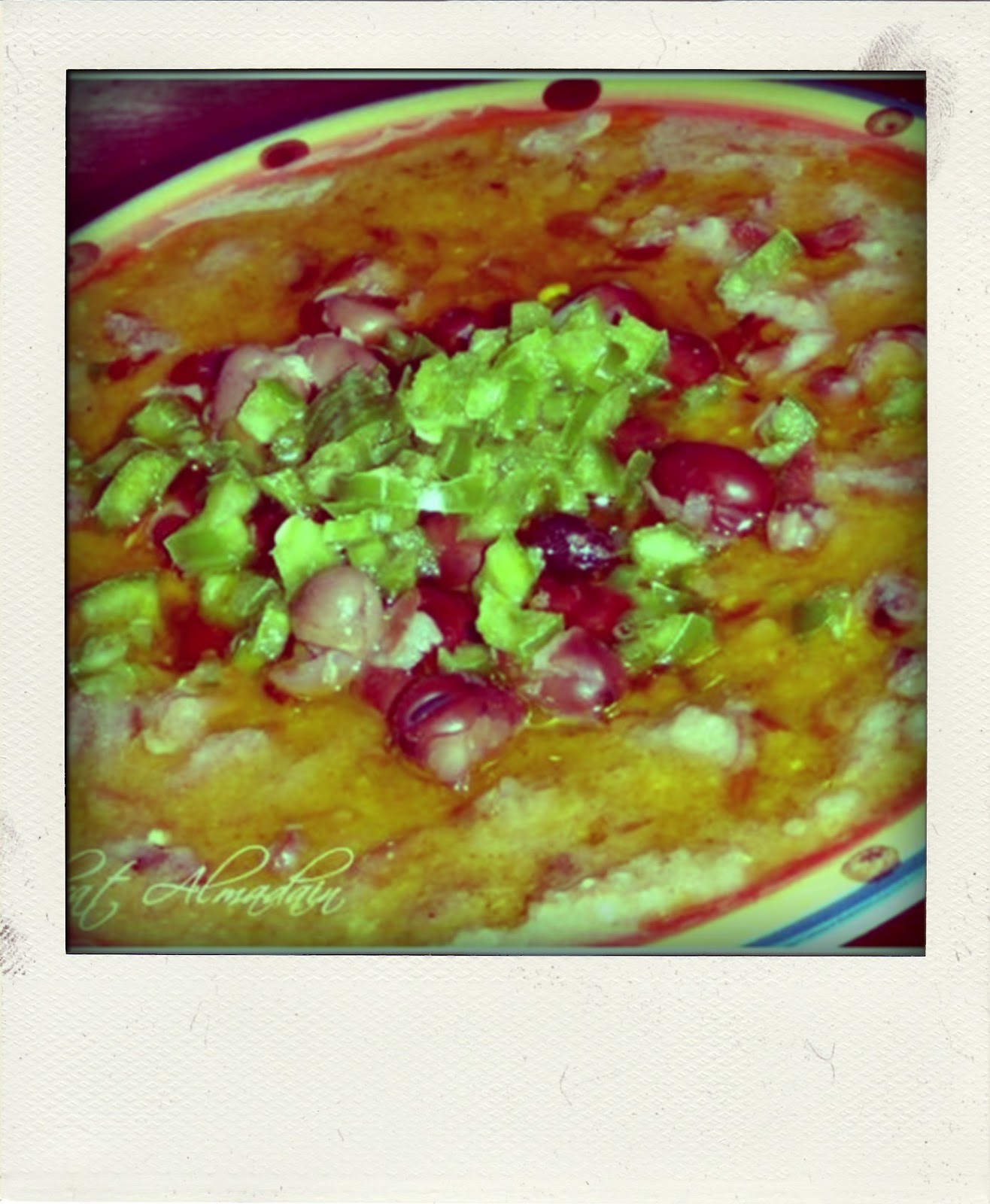
Minutes before Maghrib, you see queues of people lining up to get there share of some of the most delicious Hijazi cuisines, these dishes are available the whole year, but some of them only get popular during Ramadhan as a crucial Iftar meal, the Iftar table is not complete without: Foul and Tamees bread, Shorba, Soobya, Sambosa .. and a lot lot more I can't even think of. Zamzam water is a must to break the fast.
It is a habit to share Iftar food in Ramadhan between neighbors, you give your neighbor a dish and they give you theirs. This how love and compassion is spread and shared, also food.
During Taraweeh prayer time, the air is filled with beautiful recitations of the Qur'an, there are many Masjids in Makkah, if you drive a distance you'll see at least 3 or 4 Masjids on your way .. so imagine how amazing it is when every single of these Masjids sound their speakers high for everyone to hear.
Taraweeh in Al Masjid Al Haram is sensational, the number of people attending there is magnificent, the lines may sometimes reach outside to the streets! Subhanallah, so coming early like after Asr is recommended, and let's not forget the beautiful recitations by famous Imams like As-Sudais and Maher Al Muaiqly,
The blessed month of Ramadhan has many different identities depending on where it is being welcomed, the traditions, habits and foods may also differ according to the region or country.
Where I come from, Makkah Al Mukarramah, Ramadhan has a very unique sense, in this month people from all over the globe come to the holy land to have a taste of what Ramadhan tastes like over there. Weeks before the month starts, people start marching to Makkah, either from within Saudi Arabia, or from far far away, either to spend the whole month there, or for just few days with Umrah. Makkah becomes very crowded and its streets are filled with nonstop traffic. Makkah becomes sleepless.
Minutes before Maghrib, you see queues of people lining up to get there share of some of the most delicious Hijazi cuisines, these dishes are available the whole year, but some of them only get popular during Ramadhan as a crucial Iftar meal, the Iftar table is not complete without: Foul and Tamees bread, Shorba, Soobya, Sambosa .. and a lot lot more I can't even think of. Zamzam water is a must to break the fast.
It is a habit to share Iftar food in Ramadhan between neighbors, you give your neighbor a dish and they give you theirs. This how love and compassion is spread and shared, also food.
"Shurek Bread"
Shurek or Sherek: Hijazi style bread. Made with special dough, it is eaten with yogurt or dates, dipped in Foul (a dip made with Fava beans), with "Dugga" (a powder made out of many spices), or just eat right away.
"Foul"
"Tamees"
Tamees according to many is Hijazi originally, but migrants from Afghanistan and Yemen has mastered is making. You see a lot of "Foul n Tamees" shops around Makkah. Tamees bread is usually big, around 40cm in diameter. It has many varieties, like cheesy, buttery or crispy.
"Shorba"
Shorba is a famous Hijazi cereal soup, the texture is more to a stew then a soup sometimes. Contains delicious lamp chunks, which gives it that unique taste.
"Sambosa"
Made out of wrapping dough flake, filled only with a generous amount of cooked ground beef.
"Soobya"
Soobya is the drink of all drinks during Ramadhan, this very delicious drink is made of malt and raising mix (dried grapes). The most popular of all is made by 'ammu Sa'eed Al Khudari, everyone in Makkah know this guy.
"Kibda"
Kibda literally means "liver", this dish is basically made of fresh lamb liver, cut into pieces and cooked with onions, tomatoes and spices, Kibda is eaten usually with flatbread. Sometimes besides liver, lamb gut is added (stomach, intestines) hearts and also kidneys .. believe me it's delicious i'm drooling right now!
"Basbosa"
Basbosa is a famous desert in the middle east, it's get popular during Ramadhan and Eid.
Taraweeh in Al Masjid Al Haram is sensational, the number of people attending there is magnificent, the lines may sometimes reach outside to the streets! Subhanallah, so coming early like after Asr is recommended, and let's not forget the beautiful recitations by famous Imams like As-Sudais and Maher Al Muaiqly,
During Ramadhan tailor shops get really busy, everyone is pre-ordering there Eid thobes (Jubbah), clothe shops are also crowded. Hijazi people have their own unique fashion.
Indeed, Ramadhan in Makkah is like no other, Makkah has a special place in the hearts of every single Muslim, Muslims across the centuries have been migrating there to have the honor of living there, even before the beginning of Saudi era. That's why Hijaz (the west side of the Arabian Peninsula) is made of many cultures. E.g Bukharies from central asia, Malays from southeast Asia, Yemenis and Africans, which have influence everything you see now in Makkah.
By Majid Maetalong
SCIENCESS Exco - International Students Affairs Bureau.
Monday, August 6, 2012
RAMADHAN
Assalamualaikum and Ramadhan Kareem..
"The
month of Ramadaan is the month in which the Quran was revealed as a guidance
for humanity, as a clear proof of that guidance, and as a criterion for
distinguishing between right and wrong" (2 : 185).
In as
much as celebrating the Prophet’s birthday (the Milad un-Nabi) can be read as a
celebration of the greatness of the Prophet (SAW) in his aspect of the perfect
man (Insan ul-Kamil); and in as much as Yaum Ashura can be read as a
celebration of the saving of Nabi Musa (AS) from the tyrannical pharaonic
oppressors; similarly Ramadaan can be read as a celebration of the revelation
of the Quran during this month. It is a celebration of the Quran as both a
living guidance and a living proof to humanity. It stands as a living proof of
the divinity of Allahu Ta’aala, as a living proof of the authenticity of the
prophethood of Muhammad (SAW), and of the supremacy of revelation over all
else.
But the
Quran is also a Huda (a guidance). And as Huda – as true guidance – it teaches
us how to live our lives as complete human beings. It teaches us how to live
our lives with respect, dignity, honor, and love. It further teaches us that
Allahu Ta’aala is a divinity that embraces the concerns of all humanity.It is
also important to remember that the guidance and concerns of Allahu Ta’aala are
not limited to mere theoretical or idealistic utterances. The guidance of
Allahu Ta’aala plunges us into the mainstream of our earthly existence. One of
the ways in which Allahu Ta’aala has done this is by making the fast obligatory
upon all of us.Not only
are we required to sympathize with the poor and the hungry, but we are thrown
into the very experience of hunger.
Not only
are we required to reflect upon our condition in a society with its mores,
customs, habits, rules, and general routine – which looms far greater than the
sum of its individuals, but it forces us to reflect upon the very nature of
that society. It is so easy to become a cog in the political, economic, social,
and industrial machine. In short to become a spiritually forgetful being in the
material and mechanical processes of ordinary life.Fasting
forces us to break this forgetfulness, and forces us to anchor the
consciousness of truth and spirituality in every domain of our existence i.e.
to act upon the truth of Islam and to live by its spirituality.
Fasting,
by depriving us of the daily luxuries and niceties of our mundane existence
asserts the supremacy of our essential condition as beings endowed with a soul
(ruh) over our condition as material and temporal beings. Fasting, therefore,
at once draws us into the bosom of Allahu Ta’aala and allows us to
reflect upon the high moral, social, and spiritual values which Islam sets for
us. In other words fasting focuses our attention on the broader meaning of
Taqwa as expressed in the following verse:
"O
you who believe, fasting has been prescribed upon you as it has been prescribed
upon those before you so that you may learn Taqwa" (2 : 183).
The
Arabic of the phrase in the above verse "so that you may learn Taqwa"
reads as "l’allakum tattaqun". The term "taqwa" – in its
narrower meaning - has been variously translated as fear, piety,
self-restraint, and guarding against evil. However, to do justice to its
meaning, and to better understand the link between the Quran as Huda (true
guidance) and Taqwa as one of the most desired virtues in man, a more
comprehensive understanding of the term is required. That understanding is
dependent on our understanding of the nature of man and woman.
The
Islamic perspective is that we, as people, are composed of both body and soul
or matter and spirit. We are also considered to be both the viceregents of
Allah on earth (khalifatullah) and his servants (‘ibaadullah). As viceregents
we are ordered to perfect our earthly existence whether it be in our private,
domestic, social, economic or political lives. As servants of Allah we are
ordered to perfect our spiritual existence. Taqwa circumscribes both these
conditions.
In other words, and as alluded to earlier, it means to observe our duty towards Allahu Ta’aala in all our social and communal relations (towards Muslims and non-Muslims alike); and in our spiritual relations towards Allahu Ta’aala Himself. This is a difficult task and one of the means that Allah has given us to attain this level is the fast. But, and typical of Quranic "pragmatism", there are no false promises. In the Arabic the emphasis is quite clearly on the phrase "l’allakum" ("so that you may" or "perhaps"). The means to Taqwa, through the great institution of fasting, have been placed at our disposal. It is up to us to use, misuse, or even ignore the means. This condition is encapsulated in the following Prophetic saying :
"For those who do not refrain from lying or acting on such lies, Allah has no need of their abandoning their food and drink" (Bukhari).
In other words, and as alluded to earlier, it means to observe our duty towards Allahu Ta’aala in all our social and communal relations (towards Muslims and non-Muslims alike); and in our spiritual relations towards Allahu Ta’aala Himself. This is a difficult task and one of the means that Allah has given us to attain this level is the fast. But, and typical of Quranic "pragmatism", there are no false promises. In the Arabic the emphasis is quite clearly on the phrase "l’allakum" ("so that you may" or "perhaps"). The means to Taqwa, through the great institution of fasting, have been placed at our disposal. It is up to us to use, misuse, or even ignore the means. This condition is encapsulated in the following Prophetic saying :
"For those who do not refrain from lying or acting on such lies, Allah has no need of their abandoning their food and drink" (Bukhari).
Taqwa can
further be realized through three opportunities provided for us by the fast:
- The
disciplining of the will (tarbiyat ul-Iradah)
- The
purification of the self (tazkiyat un-Nafs)
- The
purification of the soul (tasfiyat ur-Ruh)
The
potential of fasting as such, and Ramadaan in particular, in making available
these opportunities cannot be denied.
With
regard to the disciplining of the will the Prophet Muhammad (SAW) said :
"For everything there is a purification and the purification of the body
is to fast; and fasting is half of endurance."
All acts of endurance are
naturally a function of the strength or otherwise of the will. If the will is
strong endurance is strong; if weak then endurance is weak. One of the primary
aims of Sabr – as an act of will – is to bring the will of man in harmony with
the Will of Allah. This is essential if we wish to be acknowledged as true
‘ibaad (servants) of Allah.
As for
purification of the self (nafs) – here understood as the egotistic self
(an-Nafs al-Ammarah bi s-Su) – the following Prophetic saying is a clear
reference to the fact that fasting is intended as a conduit for such
purification:
"If anyone of you fasts then do not speak obscenely nor act
obscenely. If anyone picks a fight with him or insults him then let him say ‘I
am one who fasts, I am one who fasts.’"
Here the outer manifestations of
the nafs viz. that of obscene speech (rafath) and obscene behavior (jahal), are
addressed with a view to bringing under control, and hence purifying, the inner
self.
The
purification of the soul, on the other hand, is contingent on the extent to
which it is absolved from all sin. The Prophetic saying :
"Those who fast
with absolute faith and absolute contentment will have all their previous sins
absolved",
may be read as a definite promise to the effect that the
absolution of one’s sins is guaranteed if the two ostensibly simple conditions
of fasting with total faith (iman) and total contentment (ihtisaab) are met.
These
three processes are intrinsic to the cultivation of genuine Taqwa, and few
religious acts provide a greater opportunity for its cultivation than Ramadaan.
Allah
says at the conclusion of the verse initially quoted:
" That He wants you
to complete the prescribed period (of fasting) so that you are able to magnify
the greatness of Allah for His having guided you, and so that – perchance – you
may be thankful" (2 : 185).
The
greatness of Ramadaan therefore lies in the opportunity it offers for the
development of Taqwa – a virtue that allows us to truly participate in that
great cosmic celebration in honor of the revelation of the Quran as a Huda to
all people, which is, as mentioned earlier, Ramadaan itself. It is a virtue furthermore,
that allows us to magnify Allah Ta’aala as He ought to be magnified, namely,
with complete awareness of our earthly duties and spiritual vocation; and,
therefore, to be of those who are truly thankful to Allah. It is a virtue too,
which is ultimately celebrated in the Quran itself, for Allah says:
" The
best of you are those who have learnt Taqwa" (49 : 13).
Shaykh
Seraj Hendricks
-IAB SCIENCESS-
Subscribe to:
Comments (Atom)